Old School Letter
from our CEO
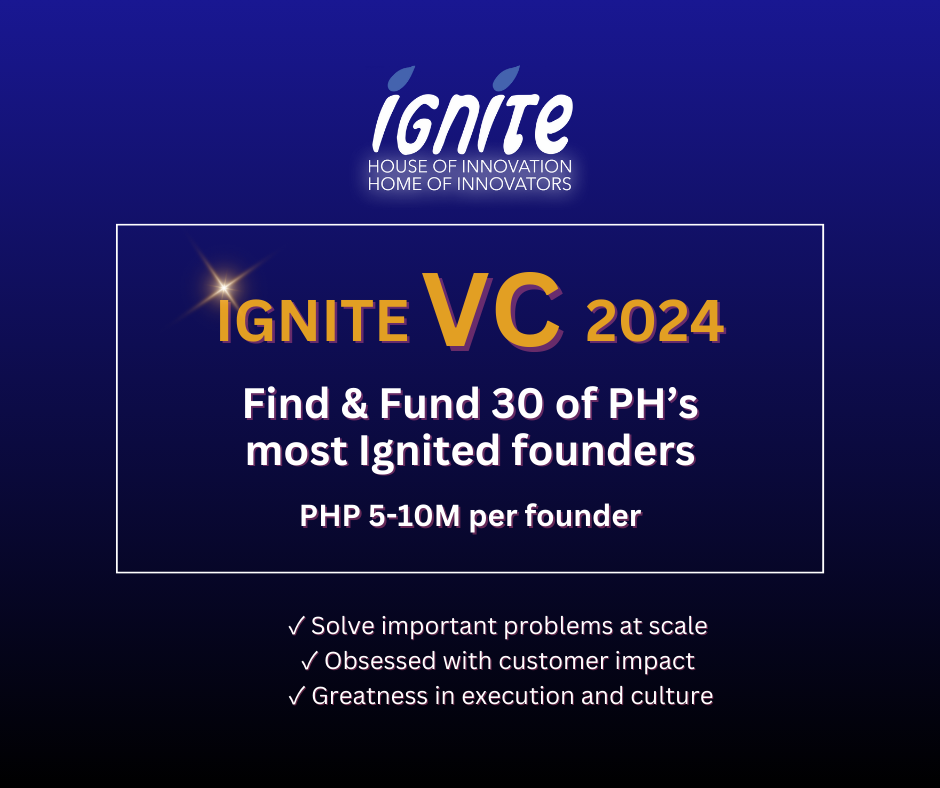
We didn't skip a beat. Started 2024 the way we ended 2023: full throttle on our investment mandate to find and fund 30 of the country’s most ignited founders.
•
Q4 2023 saw us pull the trigger on 5 iconic investments and we’re on track to exceed that in 1H 2024 (more on this later, including our 3 key investment criteria and how we’ve expanded our venture capital focus to include steady ships, besides the usual rocket ships).
•
In January we broke all records with our biggest Ignite ever. Partnering with Ateneo’s DOST-backed Blue Nest Technology Business Incubator and the Ateneo Intellectual Property Office, we gathered some of Manila’s most badass founders, investors, and CEOs, along with our most promising young professionals and student leaders. For 5+ hours on a chill January afternoon, we ignited on the common ground of Peak Performance and Peak Living in 2024.
More Than VC
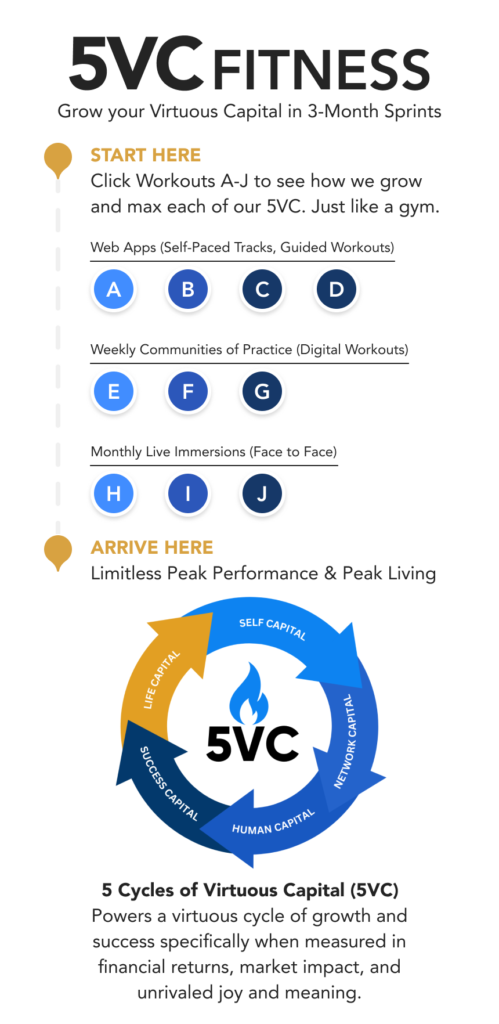
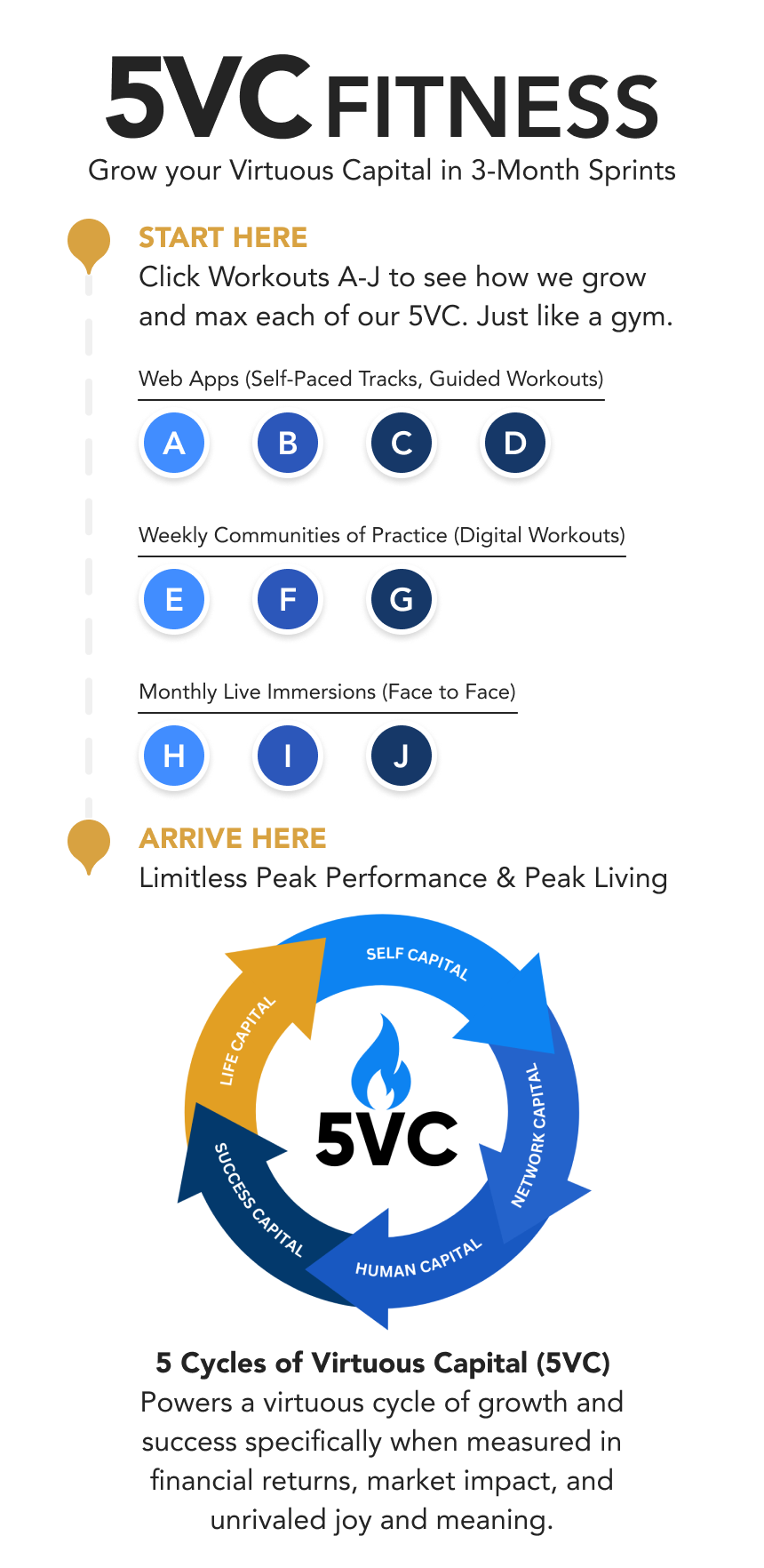
Our January highlight was the launch of 5VC FITNESS, a hybrid app, online and face-to-face platform for individuals, teams, and organizations to methodically and measurably grow their 5 Cycles of Virtuous Capital in 3-month sprints.
WHY 5VC
Data does not lie. Based on our prior decade of pushing extreme peak performance (particularly innovation-driven quantum leaps) in both corporate and startup settings, we’ve found that the highest performing individuals and teams consistently use a kind of Virtuous Cycle that powers all kinds of breakthrough growth.
This Virtuous Cycle holds true for giant corporations as much as for startups, the key difference being velocity and time to impact (big companies take much more time).
HOW IT WORKS
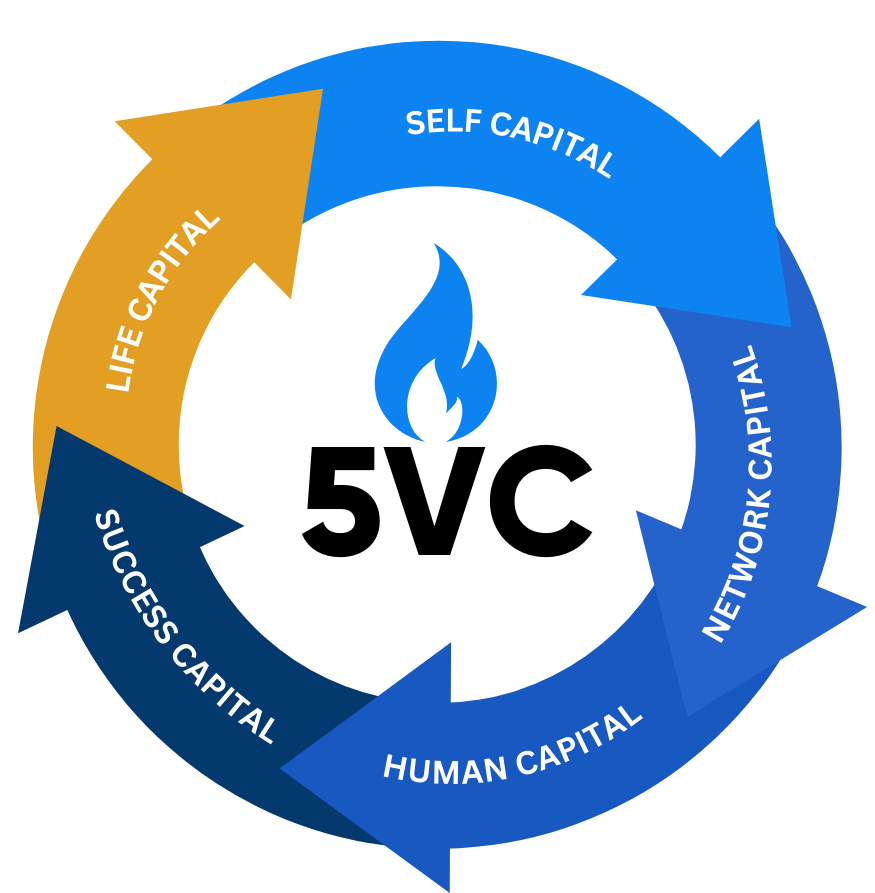
Specifically, peak performers utilize 5 distinct, but interconnected cycles of Virtuous Capital (beyond just financial capital), where each cycle of capital builds on and then builds up the other cycles.
In so doing, these 5 Cycles of Virtuous Capital (5VC) enable the highest levels of peak performance (a virtuous cycle of growth and success) specifically when measured in financial returns (both personal and corporate ROI), market impact, and unrivaled team morale.
MEET THE 5VC
5 cycles of Virtuous Capital; measurable for yourself or your team/organization. Feel free to take a quick diagnostic of where you're at with each cycle of capital.
Capacity to continuously grow and build on my authentic sense of self– the deeper and deeper truths about Who I am, Why I’m here, What I’m born to do, What gives me joy, What I care about deeply, etc. Self Capital works like a personal navigation system (GPS) for life: to steer through life’s twists and turns (career, relationships, passion, purpose, mission, etc.); to continuously deepen my commitment, resilience and impact in my chosen paths; and to resist the lures, detours and dead-ends of false ambition, insecurity, fear, doubt, trying to be like others/someone I am not, etc. Self Capital is my capacity to stand for my authentic self in the journey of life.
💬 Where I’m at with my Self Capital: 0-10
💬 Where I’m at with my Self Capital: 0-10
Capacity to continuously grow and build on my authentic sense of self– the deeper and deeper truths about Who I am, Why I’m here, What I’m born to do, What gives me joy, What I care about deeply, etc. Self Capital works like a personal navigation system (GPS) for life: to steer through life’s twists and turns (career, relationships, passion, purpose, mission, etc.); to continuously deepen my commitment, resilience and impact in my chosen paths; and to resist the lures, detours and dead-ends of false ambition, insecurity, fear, doubt, trying to be like others/someone I am not, etc. Self Capital is my capacity to stand for my authentic self in the journey of life.
💬 Where I’m at with my Self Capital: 0-10
💬 Where I’m at with my Self Capital: 0-10
Capacity to continuously grow and build on my authentic sense of self– the deeper and deeper truths about Who I am, Why I’m here, What I’m born to do, What gives me joy, What I care about deeply, etc. Self Capital works like a personal navigation system (GPS) for life: to steer through life’s twists and turns (career, relationships, passion, purpose, mission, etc.); to continuously deepen my commitment, resilience and impact in my chosen paths; and to resist the lures, detours and dead-ends of false ambition, insecurity, fear, doubt, trying to be like others/someone I am not, etc. Self Capital is my capacity to stand for my authentic self in the journey of life.
💬 Where I’m at with my Self Capital: 0-10
💬 Where I’m at with my Self Capital: 0-10
Capacity to continuously grow and build on the # of hi-caliber people who know what I authentically stand for and are thus eager to collaborate with me (because I fit/complement what they authentically stand for); and vice verse, # of hi-caliber people I know and am eager to collaborate with. Network Capital is measured in quality, not quantity of network. In fact, a bigger network of the wrong people leads to negative Network Capital– I will simply get into more trouble more often with more people! Network Capital is heavily influenced by Self Capital– the more we know who we really are and what we really want in life, the better we will attract the right kind of people.
💬 Where I’m at with my Network Capital: 0-10
💬 Where I’m at with my Network Capital: 0-10
Capacity to continuously grow and build on my authentic sense of self– the deeper and deeper truths about Who I am, Why I’m here, What I’m born to do, What gives me joy, What I care about deeply, etc. Self Capital works like a personal navigation system (GPS) for life: to steer through life’s twists and turns (career, relationships, passion, purpose, mission, etc.); to continuously deepen my commitment, resilience and impact in my chosen paths; and to resist the lures, detours and dead-ends of false ambition, insecurity, fear, doubt, trying to be like others/someone I am not, etc. Self Capital is my capacity to stand for my authentic self in the journey of life.
💬 Where I’m at with my Self Capital: 0-10
💬 Where I’m at with my Self Capital: 0-10
Capacity to continuously grow and build on the # of hi-caliber people I am actually collaborating with (be it via employment, projects, investments, boards, advisors, partnerships, etc). Human Capital is thus one of the most critical direct drivers of Success Capital. In our increasingly cutthroat knowledge-driven markets, nothing will help or hinder my capacity to create/deliver value like the the talented, passionate people I have on my side. In 5VC, Human Capital is directly rooted in Network Capital, which in turn is heavily influenced by Self Capital.
💬 Where I’m at with my Human Capital: 0-10
💬 Where I’m at with my Human Capital: 0-10
Capacity to continuously grow and build on my authentic sense of self– the deeper and deeper truths about Who I am, Why I’m here, What I’m born to do, What gives me joy, What I care about deeply, etc. Self Capital works like a personal navigation system (GPS) for life: to steer through life’s twists and turns (career, relationships, passion, purpose, mission, etc.); to continuously deepen my commitment, resilience and impact in my chosen paths; and to resist the lures, detours and dead-ends of false ambition, insecurity, fear, doubt, trying to be like others/someone I am not, etc. Self Capital is my capacity to stand for my authentic self in the journey of life.
💬 Where I’m at with my Self Capital: 0-10
💬 Where I’m at with my Self Capital: 0-10
Capacity to continuously grow and build on my value/Impact created and thus value captured, as measured in my financial performance (salary, income, net worth, ROI, etc.) and overall career/business growth. More and more in our fast-paced tech-driven world, my Success Capital is disproportionately driven by my capacity to deliver hi-impact innovations and solutions that work at scale. Which is why my Success Capital is so heavily dependent on my Human Capital– because this kind of hi-impact innovation and creative problem-solving demands the very best people and teams.
💬 Where I’m at with my Success Capital: 0-10
💬 Where I’m at with my Success Capital: 0-10
Capacity to continuously grow and build on my authentic sense of self– the deeper and deeper truths about Who I am, Why I’m here, What I’m born to do, What gives me joy, What I care about deeply, etc. Self Capital works like a personal navigation system (GPS) for life: to steer through life’s twists and turns (career, relationships, passion, purpose, mission, etc.); to continuously deepen my commitment, resilience and impact in my chosen paths; and to resist the lures, detours and dead-ends of false ambition, insecurity, fear, doubt, trying to be like others/someone I am not, etc. Self Capital is my capacity to stand for my authentic self in the journey of life.
💬 Where I’m at with my Self Capital: 0-10
💬 Where I’m at with my Self Capital: 0-10
Capacity to continuously grow and build on my personal sense of joy, meaning, impact and fulfillment– this is ultimately what we want in life. When we reflect on the prior 4 cycles of capital, this is where all roads lead. From Self Capital, to Network and Human Capital, to Success Capital– everything we do comes down to how rich we are in joy, meaning, impact and fulfillment.
💬 Where I’m at with my Life Capital: 0-10
Learn how to grow your virtuous capitals in 3-month sprints
5VC MARKET APPLICATIONS
5VC
MARKET APPLICATIONS
Bringing Peak Performance to every
corner of Filipino society
corner of Filipino society
Bringing Peak Performance to every corner of Filipino society

YOU? Where can we bring
5vc with you?
5vc with you?
© 2024 Ignite House. All Rights Reserved.